Puget Sound Transitional Care
Nursing Home Facility
2800 South 224th Street,, Des Moines, WA 98198

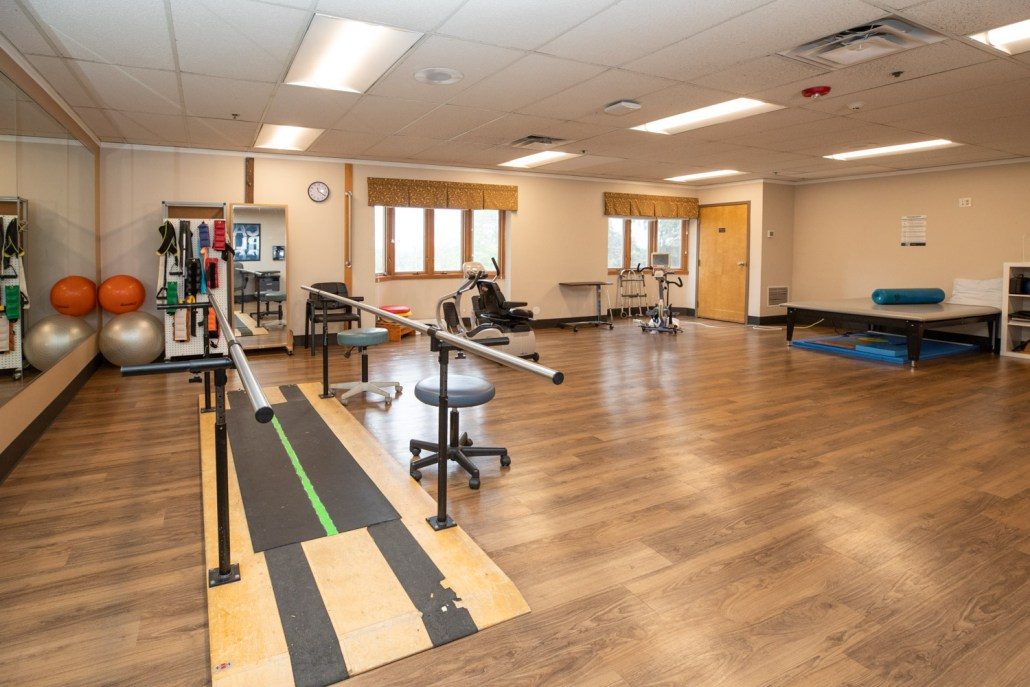



Puget Sound Transitional Care is a senior care community located in Des Moines, WA. It provides nursing home care and senior living for older adults in the Des Moines area. To learn more or schedule a tour, call (206) 824-0600.
Operated by The Ensign Group, which runs 419 communities in our directory.
With 165 beds, Puget Sound Transitional Care is one of the larger communities in the area, senior care communities in Des Moines average about 17 beds. Larger communities more often keep clinical staff on site around the clock and can offer a wider range of on-site therapy and activities, though some families prefer the quieter feel of a smaller setting.
Federal reporting puts occupancy at about 49% of its licensed beds, so availability is more likely here than at busier communities nearby.
Medicare rates this community 2 out of 5 stars overall, a score based on health inspections, staffing levels and quality measures. Communities in Des Moines average about 3.5 stars. Its most recent standard health inspection was in August 2025 and recorded 24 deficiencies.
Residents receive about 3.8 hours of nursing care per day on average, including 0.8 hours from a registered nurse. Communities in Des Moines average about 4.3 hours. Nursing staff turnover over the past year was about 32%.
The community is located in King County, WA.
Inspection record
In its last three standard inspections and any complaint visits, federal inspectors cited 63 problems at Puget Sound Transitional Care. 1 finding involved harm to a resident, including 1 that put residents in immediate danger. 9 came from investigating complaints by residents or families.
Findings from the most recent inspection cycle
-
Could cause more than minimal harm, one or a few residents
Freedom from Abuse, Neglect, and Exploitation
Protect each resident from all types of abuse such as physical, mental, sexual abuse, physical punishment, and neglect by anybody.
-
Could cause more than minimal harm, a pattern
Quality of Life and Care
Ensure that feeding tubes are not used unless there is a medical reason and the resident agrees; and provide appropriate care for a resident with a feeding tube.
-
Could cause more than minimal harm, one or a few residents
Resident Assessment and Care Planning
Safeguard resident-identifiable information and/or maintain medical records on each resident that are in accordance with accepted professional standards.
-
Could cause more than minimal harm, a pattern
Resident Rights
Provide the required documentation or notification related to the resident's needs, appeal rights, or bed-hold policies.
-
Could cause more than minimal harm, a pattern
Resident Assessment and Care Planning
Develop the complete care plan within 7 days of the comprehensive assessment; and prepared, reviewed, and revised by a team of health professionals.
-
Could cause more than minimal harm, a pattern
Nutrition and Dietary
Employ sufficient staff with the appropriate competencies and skills sets to carry out the functions of the food and nutrition service, including a qualified dietician.
-
Could cause more than minimal harm, a pattern
Nutrition and Dietary
Procure food from sources approved or considered satisfactory and store, prepare, distribute and serve food in accordance with professional standards.
-
Could cause more than minimal harm, a pattern
Infection Control
Educate residents and staff on COVID-19 vaccination, offer the COVID-19 vaccine to eligible residents and staff after education, and properly document each resident and staff member's vaccination status.
Show 16 more
-
Could cause more than minimal harm, one or a few residents
Resident Rights
Ensure that residents are fully informed and understand their health status, care and treatments.
-
Could cause more than minimal harm, one or a few residents
Resident Rights
Honor the resident's right to request, refuse, and/or discontinue treatment, to participate in or refuse to participate in experimental research, and to formulate an advance directive.
-
Could cause more than minimal harm, one or a few residents
Resident Assessment and Care Planning
Assess the resident completely in a timely manner when first admitted, and then periodically, at least every 12 months.
-
Could cause more than minimal harm, one or a few residents
Resident Assessment and Care Planning
Ensure each resident receives an accurate assessment.
-
Could cause more than minimal harm, one or a few residents
Resident Assessment and Care Planning
Coordinate assessments with the pre-admission screening and resident review program; and referring for services as needed.
-
Could cause more than minimal harm, one or a few residents
Resident Assessment and Care Planning
Ensure services provided by the nursing facility meet professional standards of quality.
-
Could cause more than minimal harm, one or a few residents
Quality of Life and Care
Ensure residents do not lose the ability to perform activities of daily living unless there is a medical reason.
-
Could cause more than minimal harm, one or a few residents
Quality of Life and Care
Provide care and assistance to perform activities of daily living for any resident who is unable.
-
Could cause more than minimal harm, one or a few residents
Quality of Life and Care
Provide activities to meet all resident's needs.
-
Could cause more than minimal harm, one or a few residents
Quality of Life and Care
Provide appropriate treatment and care according to orders, resident’s preferences and goals.
-
Could cause more than minimal harm, one or a few residents
Quality of Life and Care
Provide appropriate care for residents who are continent or incontinent of bowel/bladder, appropriate catheter care, and appropriate care to prevent urinary tract infections.
-
Could cause more than minimal harm, one or a few residents
Quality of Life and Care
Try different approaches before using a bed rail. If a bed rail is needed, the facility must (1) assess a resident for safety risk; (2) review these risks and benefits with the resident/representative; (3) get informed consent; and (4) Correctly install and maintain the bed rail.
-
Could cause more than minimal harm, one or a few residents
Pharmacy Service
Ensure medication error rates are not 5 percent or greater.
-
Could cause more than minimal harm, one or a few residents
Pharmacy Service
Ensure drugs and biologicals used in the facility are labeled in accordance with currently accepted professional principles; and all drugs and biologicals must be stored in locked compartments, separately locked, compartments for controlled drugs.
-
Could cause more than minimal harm, one or a few residents
Infection Control
Implement a program that monitors antibiotic use.
-
Could cause more than minimal harm, one or a few residents
Environmental
Keep all essential equipment working safely.
A citation on its own does not mean poor care, and most are corrected within weeks. What matters most is how serious the findings were and whether the same problems keep coming back. When you visit, it is fair to ask the administrator what inspectors found and what has changed since.
Puget Sound Transitional Care offers nursing home care and senior living.
Facility details
- Organization type for-profit corporation
- Beds / units 165
- Occupancy 49%
- Nursing hours per resident/day 3.8
- Annual staff turnover 32%
- Last health inspection August 2025
Resident & family reviews
No one has shared a review of Puget Sound Transitional Care yet. If you or someone you love has lived here, what you saw could help another family make this decision with more confidence.