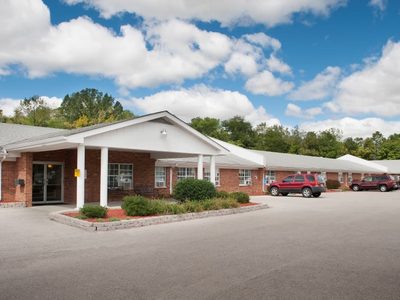
Albany Health Care & Rehabilitation Center
910 West Walnut Street
Albany, IN 47320
Our site looks to provide seniors and their loved ones with essential information regarding nursing care, so they can search for an appropriate nursing home that fulfills their financial, medical and emotional needs.
Muncie nursing homes offer individualized forms of care for area seniors and patients with a broad range of medical issues. Nursing homes, or skilled nursing facilities, are places of residence that provide medical, custodial and social care to those with terminal, chronic, serious, sub-acute and acute health conditions. Patients are treated by an interdisciplinary team of caregivers, which includes physicians, nurses, nursing aids, specialists, therapists, dietitians, social workers and non-medical personnel, that are available to give around-the-clock health monitoring, evaluation, observation and management.
Short-term care and long-term care are the two most general types of nursing care. Some Muncie skilled nursing facilities have special care units that are separated from patients in general admission. These units treat specific medical conditions, like dementia or Alzheimer’s.
Short-term care is for patients who need rehabilitative services after a stroke, heart attack, aneurism, fall or other acute medical incident. Many short-term patients come directly from hospital care. Their doctor usually requires them to seek nursing care because they need further medical supervision. Nursing personnel guide patients down a personalized path of recuperation. Patients restore strength and rebuild function through occupational, respiratory, speech and physical therapy. At a certain level of health, patients are ready to move to an appropriate lower level of care. After nursing care, the most common options are assisted living and in home care.
Hospital care is the first instance of medical treatment for three of every four short-term nursing patients. Proper hospital care provided by skilled doctors can jumpstart a patient’s recovery process and can advise them on finding a quality area nursing home. The best Muncie area health care services, based on patients’ hospital experiences, are offered by Indiana University Health Ball Memorial Hospital.
Long-term care concentrates on administering advanced forms of care to patients with serious or chronic medical conditions. Patients have illnesses and diagnoses like cancer, hypothyroidism, cardiovascular disease, kidney disease, multiple sclerosis and diabetes that are often in a declining state. Nursing personnel are tasked with restoring or improving the health of these patients. Oftentimes elaborate and complex courses of action are needed to adequately treat long-term care patients. The extensive and extended medical needs of these patients are executed by licensed and registered doctors and nurses. They deliver routine check-ups and perform medical procedures like wound care, dialysis, medication adjustment, intravenous therapy, injections and colostomies. Non-medical caregivers are responsible for assisting patients with basic hygiene, dressing, washing, eating, walking and other activities of daily living. Social workers are present to offer patients a level of companionship, reassurance and independence.
Nursing care costs in Muncie vary depending on patients’ desired accommodations. Private SNF rooms cost $6,813 per month, very close to the Indiana median level. Semi-private SNF rooms cost $5,323 per month, nearly $300 per month below the state median.
For some seniors, moving to nursing care goes against their wishes. It is not unusual for patients to believe that they do not need advanced care. Due to the drawbacks of nursing care, such as lessened social freedom and being removed from friends and family, patients sometimes think they can still live independently. To caregivers, these patients can sometimes prove difficult to properly treat. Some patients refuse medication. Caregivers can also experience problems with family members who do not approve of specific care methods. This is a stressful situation for nursing personnel who have to walk a fine line between adequately caring for patients as per regulations or nursing standards and the demands of family members. However, quality nursing facilities understand that these situations often arise due to the emotionally charged nature of nursing care. They have well-trained personnel who can defuse or mitigate these types of circumstances.
| Assisted living (state avg, monthly) | $3,620 |
|---|---|
| Nursing home, semi-private (monthly) | $5,690 |
| Nursing home, private room (monthly) | $6,840 |
| In-home homemaker (monthly) | $3,430 |
| In-home health aide (monthly) | $3,620 |
| Adult day care (monthly) | $1,410 |
910 West Walnut Street
Albany, IN 47320
2401 University Ave
Muncie, IN 47303
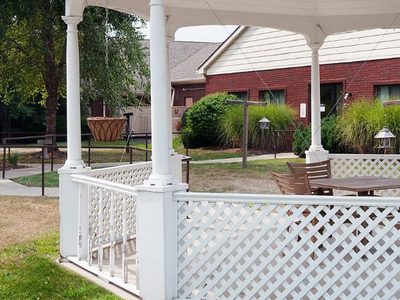
3400 W Community Dr
Muncie, IN 47304
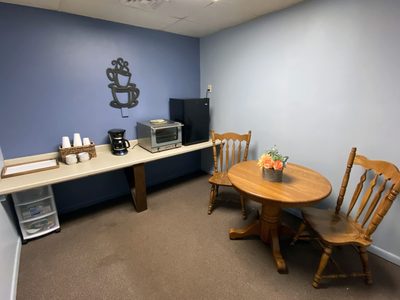
2701 Lyn-Mar Drive
Muncie, IN 47304
Our Golden LivingCenter would like to extend you a warm welcome. Your doctor has recommended that you receive certain care, and we are happy that you chose us to provide you with that care. Our staff will review your...
505 N Gavin St
Muncie, IN 47303

4600 East Jackson St
Muncie, IN 47303
2401 W. University Ave
Muncie, IN 47303
7524 E Jackson St
Muncie, IN 47302
4100 N Morrison Rd
Muncie, IN 47304
4301 N Walnut St
Muncie, IN 47303
359 Randolph St
Parker City, IN 47368
2400 Chateau Drive
Muncie, IN 47303
3820 W Jackson St
Muncie, IN 47304

2200 White River Boulevard
Muncie, IN 47303
Parkview Nursing Center is a leading provider of long-term skilled nursing care and short-term rehabilitation solutions. Our 87 bed facility offers a full continuum of services and care focused around each individual...
5801 West Bethel Avenue
Muncie, IN 47304
2000 S Andrews Rd
Yorktown, IN 47396
This summary also covers Albany, Anthony, Cammack, Cowan, Daleville, Desoto, Gaston, Medford, Mount Pleasant, Muncie, Oakville, Progress, Royerton, Selma, Shideler, Smithfield, Yorktown and all surrounding areas.