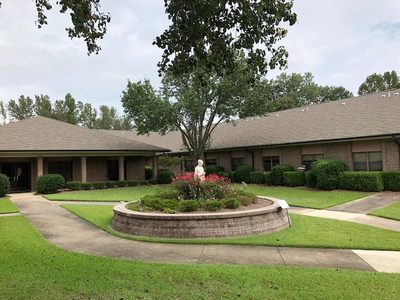
Heritage House Nursing Center
3103 Wisconsin Avenue
V'burg, MS 39180
Our site helps seniors and their loved ones gain a better understanding of the vital facts and complex issues of nursing care, so their search for a quality nursing home can yield a facility that matches their needs for affordable and appropriate care.
Vicksburg nursing homes are comprehensive residential care facilities that see to patients’ overall health through medical, social and custodial care. Nursing home residents have a variety of illnesses that cannot be properly treated by lower forms of care but are not acute enough to warrant hospital care. Also called skilled nursing facilities, nursing homes employ a multidisciplinary team of caregivers, including registered doctors and nurses, certified nursing assistants, non-medical staff, food service workers, therapists, recreational planners, housekeepers and social workers, who form a network that works to meet the individual needs of each patient.
Patients can expect to pay the Mississippi median level for monthly residency at a Vicksburg skilled nursing facility. Private and semi-private SNF accommodations bear monthly costs of $6,235 and $5,962, respectively.
Many Vicksburg area nursing facilities offer services other than the two main pillars of nursing care, short-term and long-term care. Respite care and adult day health care are designed to assist the large number of unpaid family caregivers in the country who take care of relatives, friends and neighbors. Adult day health care gives family caregivers the peace of mind that their patients are safe and socially stimulated while they are at work. Respite care consists of short periods of nursing care for caretakers’ patients. This allows caregivers to attend to other business or relax to relieve some of the pressures of everyday family care. A few area institutions also have special care units that deliver expertise in treating specific medical conditions like memory loss.
Short-term care is provided to patients who were hospitalized for falls, operations, cardiac arrest, strokes, aneurisms and other acute medical events. Patients are only admitted to a short-term facility if they are prescribed a nursing stay by their doctor. Quality hospital care is vital for correctly diagnosing patients and ensuring their recovery process starts off on the right footing. The best health care center in Vicksburg, based on patients’ previous hospital experiences, is River Region Health System. Short-term nursing personnel try to properly rehabilitate patients, so they can return home with their highest level of functioning. Short-term care operates as the midway point of a patient’s recuperation process. They do not reach a full recovery but restore a certain amount of damage they incurred. Physical, occupational, respiratory, auditory and speech therapy sessions are common for patients in this form of care. Once residents are released, many go on to seek assisted living facilities or in home care arrangements.
Long-term care admits residents who have the need for intensive forms of treatment to stabilize or improve the state of illnesses like emphysema, cancer, Alzheimer’s, congestive heart failure, paraplegia, dementia and diabetes mellitus. Patients have swiftly changing symptoms that require responsive and ongoing treatment. All members of a facility’s staff have their own role to play in managing the overall health of each patient. Nurses and doctors are available 24 hours a day to guide patients on their care plan and to administer medical procedures like CPR, catheter care, dialysis, injections, medication adjustment, wound care and enteral feeding tubes. Non-medical personnel see to patients’ everyday comfort, general hygiene and daily living tasks like feeding, toileting, walking, grooming and bathing. Nursing facilities have many amenities that try to give patients an elevated quality of life. Institutions promote psychosocial well-being with everything from counseling services and spiritual activities, to outings and recreational opportunities.
To many seniors and their families, nursing care is an option seen as a last resort or even a situation they want to avoid at all costs. Nursing homes have a poor reputation due to many of the worst aspects of the industry. Patients must incur a loss of social freedom and independence. Due to this, a few may develop mental health problems like dementia. Other prospective patients are afraid they will receive improper, abusive or neglectful care that will do little to aid their condition. Instead, they would rather take their chances being in the comfort of the own home. Although certain patients do have bad experiences under nursing care, the vast majority of facilities have quality amenities and caregivers who understand and do all they can to mitigate those situations from arising.
| Assisted living (state avg, monthly) | $2,930 |
|---|---|
| Nursing home, semi-private (monthly) | $5,960 |
| Nursing home, private room (monthly) | $6,240 |
| In-home homemaker (monthly) | $3,150 |
| In-home health aide (monthly) | $3,150 |
| Adult day care (monthly) | $1,080 |
3103 Wisconsin Avenue
V'burg, MS 39180
60 Shady Lawn Place
Vicksburg, MS 39180
2850 Porter's Chapel Road
Vicksburg, MS 39180
1708 Cherry Street
Vicksburg, MS 39180
2100 Highway 61 N
Vicksburg, MS 39183
This summary also covers Fulton, Kalamazoo, Mendon, Portage, Schoolcraft, Scotts, Three Rivers and all surrounding areas.